Short answer: If your sliding glass door lets in drafts, water, and bugs, the sliding glass door weather stripping has almost always worn out. That is the flexible seal and sweep along the panel edges and bottom rail. When it cracks, flattens, or pulls loose, the door still closes but no longer seals, so conditioned air leaks out, storm rain gets pushed in, and insects find the gap. You can safely check the seal yourself. Replacing it, and any panel or track work, is a job for a licensed pro.
We’re JDM Sliding Doors, a family-owned company based in Fort Lauderdale (Florida license CGC1536404). We repair sliding glass, pocket, barn, and screen doors across South Florida, in Miami-Dade, Broward, and Palm Beach. This matters right now because July is peak cooling season: air conditioners run their hardest, so a worn seal quietly pushes your electric bill up while it lets summer rain and bugs through the same gap. If your slider also drags or sticks, start with our sliding door repair service, since a sagging panel and a failing seal often go together.
Please read first: This post covers light, look-and-feel checks only. Anything past that, especially removing a panel, lifting glass, or pulling weatherstripping out of the track, should be handled by a professional. Sliding glass panels are heavy and can break or injure you, so when in doubt, stop and call a licensed pro.
Key takeaways
- Drafts, water, and bugs around a closed sliding door almost always trace back to worn weather stripping, not the glass itself.
- Safe to do yourself: look at the seal, feel for airflow, check for cracked or flattened rubber, clear the track, and confirm the door latches fully.
- Not a do-it-yourself job: removing panels, pulling old weatherstripping, or lifting heavy glass. Leave those to a pro.
- Weather stripping is a wear part, and South Florida sun, heat, and heavy use often age it sooner than the rubber’s rated life. A professional reseal costs far less than a new door.
The signs your sliding door weatherstripping is failing
The clearest sign is simple: the door is shut, yet you still feel air, see daylight, or find bugs and water getting past it. Weather stripping for sliding glass doors closes the gap between the moving panel and the frame, so when it fails, that gap reopens. These are the symptoms homeowners notice most.

- Drafts you can feel. Warm air along the panel seam or bottom rail means the seal has flattened or torn. That sliding glass door draft is conditioned air swapping places with outdoor heat, so your air conditioner works harder.
- Daylight or gaps around the panel. A thin line of daylight, or rubber pulled away from the frame, means the seal no longer makes full contact.
- Water seeping in during rain. Water at the base or inside the track usually means the sweep has worn down or the track is clogged. If clearing it doesn’t help, see our guide to sliding door and window leaks.
- Bugs getting through. Ants and no-see-ums slip through gaps thinner than a business card, and a worn seal is a common entry point that spraying won’t close.
- Rising cooling bills. If your bill climbed this summer with no change in use, a leaky door is a usual suspect. The U.S. Department of Energy lists sealing air leaks around doors and windows as one of the cheapest ways to cut cooling costs, and worn patio door weatherstripping is exactly that leak.
Why seals wear out: age, sun, and heavy use
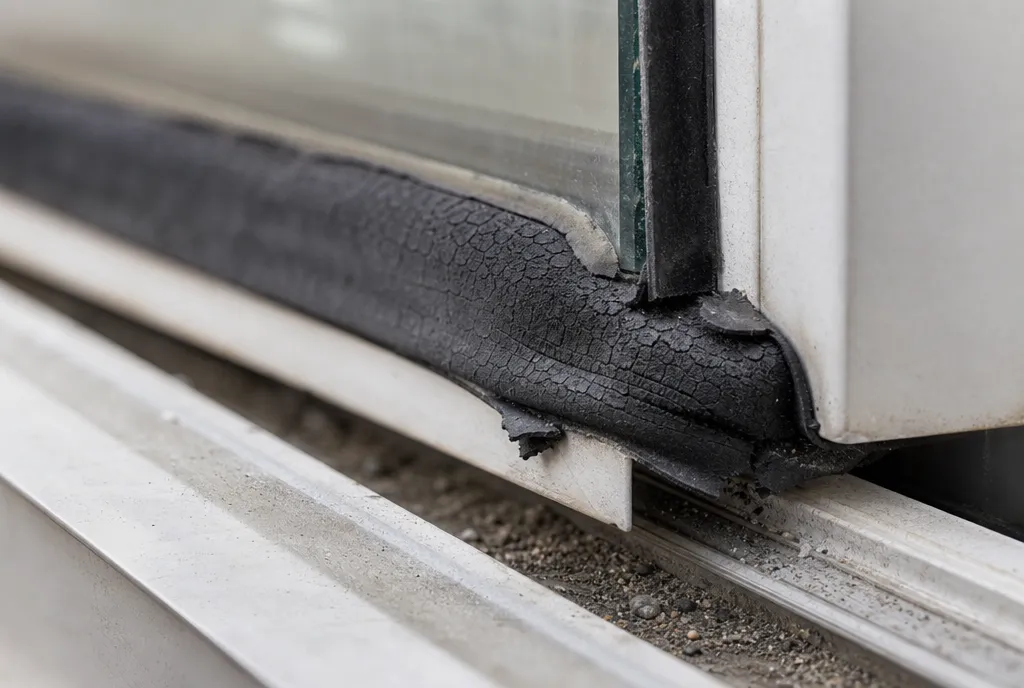
Weather stripping is a wear part, like tires or wiper blades. It is made from rubber, foam, vinyl, or a fuzzy pile fin, and all of those break down over time. Three things drive it here: ultraviolet sun hardens and cracks the rubber, constant heat flattens it, and heavy daily use to a pool or lanai wears the sweep down faster. Most weatherstripping is rated for several years, but South Florida sliders often give up sooner. A good rule: if you have never replaced the seal and the door is more than five to seven years old, it is worth a look.
The safe checks a homeowner can do
Stick to these low-risk checks. They take a few minutes and won’t damage the door. If they don’t fix it, that is your signal to call a professional.
- Look at the seal and sweep. With the door closed, inspect the rubber along both side edges and the bottom for cracks, flat spots, tears, or sections pulling away.
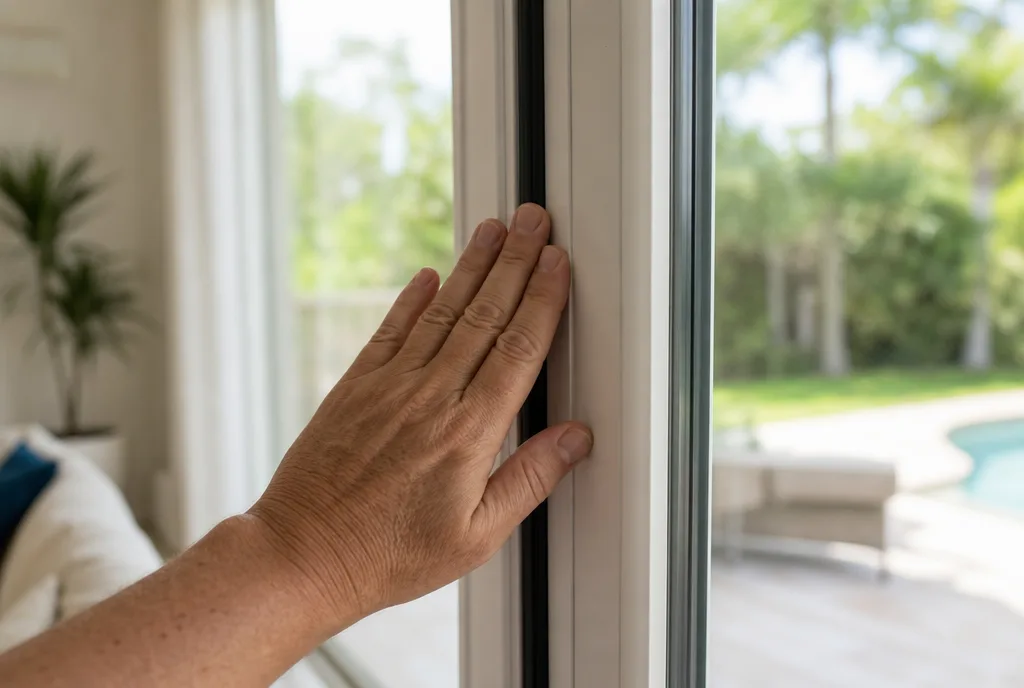
- Feel for airflow. On a hot day, move the back of your hand along the seams. Warm air means a leak.
- Check for cracked or flattened rubber. Press the seal lightly. Healthy seal springs back; old seal stays flat, feels hard, or crumbles.
- Gently clear the track. Vacuum out sand, grit, and pet hair, then wipe the track so the door closes tight and water can drain. Keep fingers clear of the rollers.
- Confirm the door closes and latches fully. Slide it shut and lock it. If it won’t latch, or only latches when you lift the panel, the door is out of alignment and the seal can’t seat.
If you still feel a draft or see water after all five, stop there. The next steps involve removing the weatherstripping or the panel itself, and those are professional-only.
What a professional reseal or track service involves and what it costs
A professional reseal is a repair, not a full door replacement, and it is one of the better-value fixes for an older slider. A technician confirms the cause first, then replaces the worn side weatherstripping and bottom sweep with the correct profile for your door, services the track, checks that the weep holes drain, and confirms the panel sits square so the new seal makes full contact. Some of this means easing the heavy glass panel out of the track, which is why it is not a do-it-yourself job: the panels are heavy, the glass can break, and a seal fitted on a sagging door won’t last.
On cost, a reseal and track service is usually a modest repair next to the thousands a new door runs, but the range is wide depending on the door and how much has to come apart. Any number online is an estimate, not a quote, so get a written, itemized one before work starts.
| What you’re paying for | Reseal / weatherstrip service | Full door replacement |
|---|---|---|
| Scope | New seals, sweep, track service | New panels, frame, hardware |
| Relative cost | Lower | Much higher |
| Best when | Glass and frame are sound | Frame is damaged or door is failing |
| Fixes drafts and bugs | Yes | Yes |
If the frame is damaged or the door is near the end of its life, resealing is only a patch, and sliding door replacement may be the better spend. A technician will tell you which one your door needs.
How to keep new weatherstripping working longer
Once the seal is fresh, a little upkeep buys years. Vacuum the track every few weeks so grit doesn’t grind the sweep, wipe the seals now and then to clear dust and salt, and don’t slam the door, since impact flattens the rubber. Keep the door on its rollers and closing square too, because a dragging panel chews through a new seal fast. Our track cleaning and lubrication tips walk through the routine, and a tight seal protects the energy savings a good slider should give you.
Frequently asked questions
Can I replace sliding glass door weather stripping myself?
You can safely inspect the seal, feel for drafts, and clear the track. Actually replacing it often means easing the heavy glass panel out and fitting the exact seal profile for your door, so it is best left to a professional to avoid a broken panel or a seal that fails again fast.
When should I replace sliding door weatherstripping?
Replace it once the seal is cracked, flattened, torn, or pulling away from the frame, or any time you feel a steady draft or find water and bugs getting past a closed door. On many South Florida sliders that is around five to seven years, sooner with heavy sun and daily use.
Will new weather stripping lower my cooling bill?
It can. A sealed door stops conditioned air from leaking out, which the U.S. Department of Energy notes is one of the cheapest ways to cut cooling costs. A leaky patio door is a common, fixable drain in summer.
Why does water come in under my sliding door when it rains?
Usually the bottom sweep has worn down, or the track is clogged so water can’t drain out the weep holes. Clearing the track is safe to try. If water still gets in, the seal or track needs professional service.
Get your slider sealed before the next storm
If your sliding glass door is letting in drafts, water, and bugs, don’t let it drain your air conditioning through cooling season. JDM Sliding Doors reseals and services sliding door tracks and weatherstripping across Miami-Dade, Broward, and Palm Beach. Schedule a free repair estimate and we’ll get your door sealing the way it should.